Search
What would you like to search for?

.png)



This enigmatic 3cm size crustacean is highly sensitive and can be found only in a few undisturbed hill streams in our forests. Development and urbanisation have greatly depleted available habitats and restricted genetic connectivity for this endemic species. Projected changes to water availability and quality resulting from climate change further pose dire threats to their continued survival.
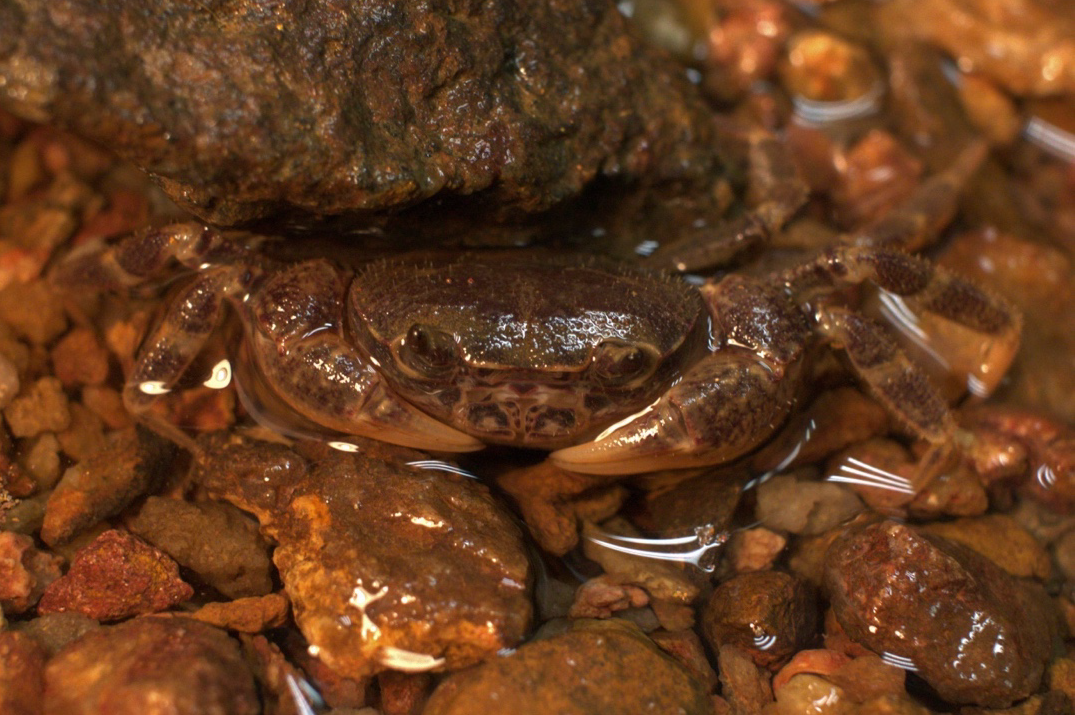
Since 2014, Mandai Nature has been supporting a team of researchers from the National University of Singapore who are working to discover how this sensitive species as well as the co-occurring Lowland Freshwater Crab may be affected by drought and acidification, which are projected to increase in Singapore in the coming years. First discovered and described in 1986, the possible extirpation from its type locality suggests that research of this nature is timely and critical. A conservation strategy for the species has also been developed in partnership with the IUCN Species Survival Commission and National Parks Board.
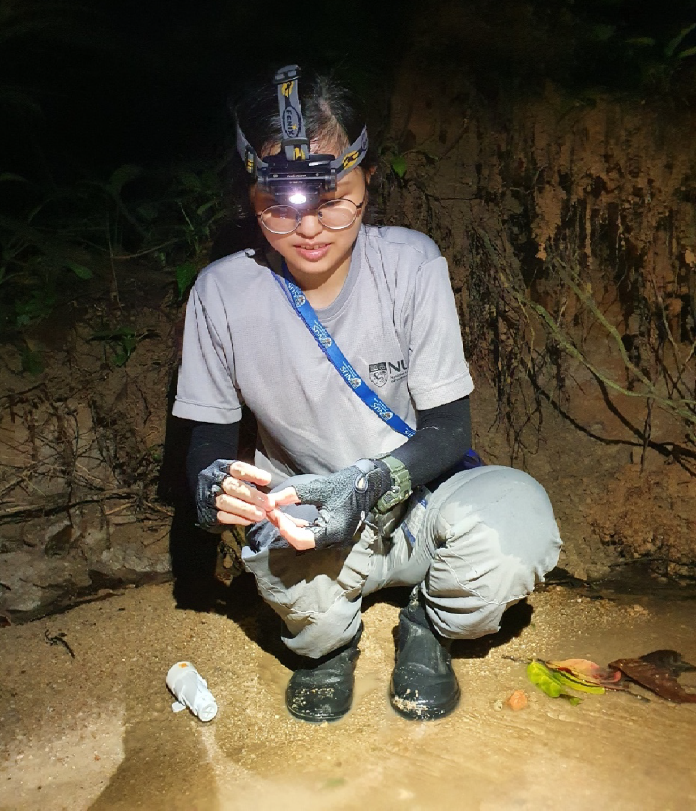
The team is conducting investigations on population structure and body condition of crabs from different locations in Singapore, as well as behavioural trials in the lab to observe how crabs react and respond to drought and acidification scenarios.
By gaining better understanding of how these highly endangered crabs are likely to change their behaviour when faced with unique climate challenges, conservationists and land managers would be able to develop and implement targeted measures aimed at sustaining crab populations in the future.

The National University of Singapore (NUS), established in 1905, is the oldest autonomous university in Singapore. Widely lauded and ranked as one of the top universities in the world, NUS is known as a quality provider of both excellent education and robust research.